
NeuroStar® TMS is a non-drug, non-invasive treatment for depression that uses targeted magnetic pulses to stimulate areas of the brain involved in mood.
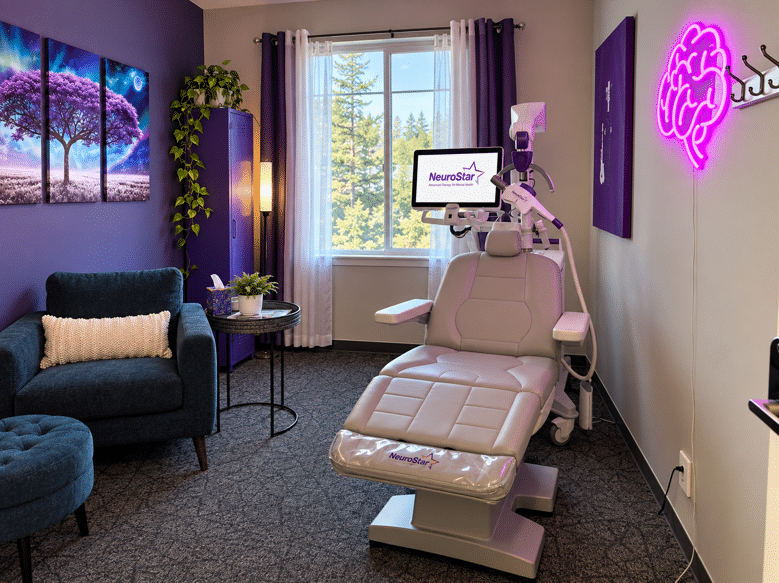
Dress comfortably and follow your care team’s instructions for meals and medications. Avoid alcohol and recreational drugs. Tell your provider about medical conditions, implants, or metal near your head.

Settle into the treatment chair while we help you get ready. Our team will explain what to expect, answer your questions, and make sure you’re prepared before treatment begins.

At your first visit, your provider identifies the treatment location and stimulation level for your individual needs. These personalized settings guide your treatment sessions throughout your course of care.

The NeuroStar coil rests gently against your scalp and delivers targeted magnetic pulses. You’ll remain awake and alert, and you may hear clicking sounds or feel a tapping sensation.

After your session, you can return to your usual activities without a recovery period. Drive yourself home, head back to work, or continue with the rest of your day.
TMS can feel uncomfortable, especially during the first few sessions. You may feel tapping or a snapping sensation on your scalp. This often becomes easier to tolerate as treatment continues. Tell your treatment team if you feel pain so they can help address it.
Possible side effects include headache, scalp discomfort, facial twitching, or lightheadedness, which often improve as treatment continues. Serious side effects are uncommon, but TMS carries a rare risk of seizure. Let your treatment team know if you experience pain or discomfort.
Yes. You remain awake and seated comfortably throughout treatment.
Each session is approximately 19 minutes, depending on your treatment type and prescription. Your first appointment will be longer because your provider will conduct a mapping your specific treatment location.
Yes, it is safe to drive after a treatment session.
Many patients begin noticing improvement within 2-3 weeks of TMS treatment, including improved mood, fewer days of depression, and greater interest in connecting with others. Sometimes, friends and family notice the changes first. Completing the full treatment is important and gives patients the best chance for long-lasting relief from depression.
Yes, your provider will advise you to continue your medication regimen throughout the course of your treatment.
Yes, NeuroStar is the #1 physician-recommended TMS Therapy for the treatment of mental health issues. It’s a safe, effective treatment that is FDA-cleared and covered by most insurance companies for MDD and MDD with anxious depression. And new payors are frequently adding OCD to their list of covered conditions. If you suffer from OCD, it’s worth asking your insurance company if they cover TMS for OCD treatment.
Coverage depends on your insurance plan and its requirements. Prior authorization may be needed. Contact our team for help understanding your benefits and potential out-of-pocket costs.
Wondering if your insurance covers NeuroStar® TMS? Our team can help you understand the verification process and coordinate with our billing specialists to review your benefits and potential out-of-pocket costs.
Not sure how these treatments differ? Explore our side-by-side comparison to learn about each option and discuss which may be right for you with your provider.